
What Is the Difference Between Simple Possession and Intent to Distribute?
If you’ve been arrested on a drug charge in Nashville or anywhere else in Middle Tennessee, you may have heard the phrase “intent to distribute” and wondered how it’s different from a simple possession charge. Intent can be the difference between a misdemeanor and a felony, between a few months in county jail and decades in state prison.
People who never intended to sell anything sometimes face felony charges because of how much they had on them or what else was found nearby. We have seen this firsthand at the Law Office of Jeffrey Jackson when representing clients accused of drug possession.
This blog breaks down what separates simple possession from possession with intent to distribute under Tennessee law, what penalties each carries, and what you should do if you’re facing either charge.
What Is Simple Possession Under Tennessee Law?
As outlined in Tennessee Code Annotated § 39-17-418, it’s illegal to knowingly possess a controlled substance unless you obtained it through a valid prescription. The key word here is knowingly. Prosecutors have to prove you knew about the drug and knowingly had control over it. Simply being near drugs, or in a car where drugs are found, isn’t automatically enough.
Tennessee law recognizes two forms of drug possession:
- Actual possession means the drugs are found directly on you, such as in a pocket, purse, or backpack.
- Constructive possession means the drugs aren’t on your body, but you had knowledge of them and the ability to control them, such as drugs found in your car’s glove compartment or a bedroom you share with others.
Simple possession is generally treated as personal use. There’s no evidence, or not enough evidence, to suggest you intended to sell or share the drugs with anyone else.
What Is Possession With Intent to Distribute?
Possession with intent to distribute (sometimes called possession with intent to sell, deliver, or manufacture) is a much more serious charge. It applies when the state believes you didn’t just possess drugs for yourself, but intended to give, sell, or deliver them to someone else.
Importantly, prosecutors don’t have to catch you in the middle of an actual drug transaction. They only need to convince a court that you intended to distribute the drugs you had. That intent can be inferred from circumstantial evidence, which is part of what makes this charge so much easier to bring than many people realize.
Evidence That Suggests Intent to Distribute
Police and prosecutors often point to factors like:
- The quantity of drugs found (more than what’s reasonable for personal use)
- Packaging materials, such as small baggies or containers
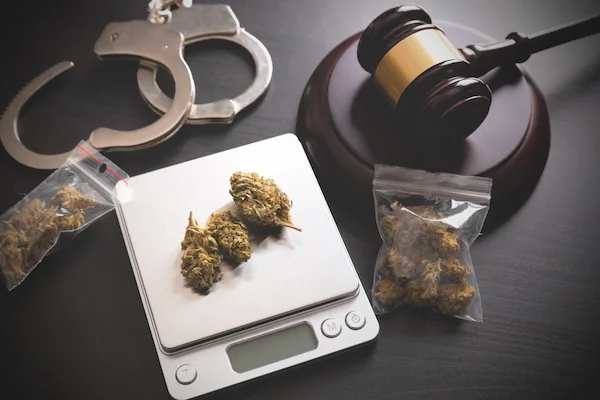
- Scales or other equipment used to weigh or portion drugs
- Large amounts of cash, especially in small denominations
- Text messages, calls, or other communications suggesting sales
- Firearms found near the drugs
None of these factors alone proves intent. But together, they’re often enough for the state to charge, and sometimes convict, someone of a felony.
Quantity Thresholds for Intent to Distribute Drugs
One of the most important things to understand is that Tennessee law allows prosecutors to argue that intent to distribute can be inferred from weight or quantity alone. This means that even without a single text message or dollar of cash, having a certain amount of a drug can trigger a distribution charge.
These thresholds vary significantly by substance. Marijuana has more lenient weight allowances than harder drugs. Even relatively small amounts of methamphetamine, cocaine, heroin, and fentanyl can result in felony-level charges. This means people can face felony drug charges for amounts they never intended to sell.
Drug Possession Penalties in Tennessee
The gap between these two charges isn’t small. It affects how much time you could spend behind bars, how much you could be fined, and how a conviction could follow you for the rest of your life.
Simple Possession Penalties
Simple possession is typically charged as a Class A misdemeanor, which carries:
- Up to 11 months and 29 days in jail
- A fine of up to $2,500
Courts also frequently impose probation, mandatory drug screens, substance abuse treatment, community service, or attendance at a drug offender school in place of jail time or in addition to it. Repeat offenses, particularly involving certain substances, can lead to enhanced penalties.
Possession With Intent to Distribute Penalties
Possession with intent is a felony, and the severity depends heavily on the type and amount of drug involved.
Schedule I drugs (heroin, LSD, psilocybin mushrooms, and similar substances): typically charged as a Class B felony, carrying 8 to 30 years in prison and a fine of up to $100,000.
Schedule II drugs (cocaine, methamphetamine, fentanyl, and certain opioids): Smaller amounts may be charged as a Class C felony (3 to 6 years, up to $100,000 in fines), while larger quantities move up to a Class B felony. Very large amounts of certain opioids can reach Class A felony territory with the most severe sentencing under Tennessee law.
Schedule III drugs (such as hydrocodone, ketamine, and anabolic steroids): typically a Class D felony, punishable by a fine of up to $50,000.
Marijuana: Amounts between a half-ounce and 10 pounds can bring 1 to 6 years and a fine of up to $5,000; 10 to 70 pounds brings 2 to 12 years and up to $50,000; 70 to 300 pounds brings 8 to 30 years; and more than 300 pounds can bring 15 to 60 years in prison.
Repeat felony convictions can also trigger mandatory minimum fines and sentencing enhancements, making the consequences even steeper for anyone with a prior record.
Consequences Beyond Jail Time
The differences don’t stop at sentencing guidelines. A felony conviction follows you well beyond the courtroom:
- Employment: Many employers run background checks, and a felony drug conviction can close doors that a misdemeanor wouldn’t.
- Housing: Landlords frequently deny applicants with felony records.
- Professional licensing: Certain careers become difficult or impossible to pursue.
- Firearm rights: A felony conviction generally means losing the right to own or possess a firearm.
- Immigration status: For non-citizens, a felony drug conviction can carry serious immigration consequences, including deportation.
Here’s what’s important to understand: the same amount of drugs can sometimes be charged as either simple possession or possession with intent, depending on how police and prosecutors interpret the evidence. That’s exactly why the “intent” element is so often worth challenging.
Common Defenses to Intent to Distribute Charges
Because intent is subjective and often inferred from circumstantial evidence, there are several ways an experienced defense attorney may be able to challenge these charges:
Challenging the Intent Element
This might involve showing that the quantity and circumstances were consistent with personal use rather than distribution, or that there’s no credible evidence, like communications or transactions, pointing to an intent to sell.
Challenging Drug Possession Itself
If the drugs weren’t found directly on you, your attorney may be able to argue you didn’t know about them or didn’t have control over them, undermining the “knowing possession” element the state must prove.
Challenging How Evidence Was Obtained
If police conducted an illegal search or seizure, or if there are problems with how evidence was handled and documented (chain of custody), that evidence may be suppressed, sometimes weakening the state’s entire case.
These are examples, not guarantees. Every case turns on its own specific facts, and the right defense strategy depends on the details of what happened during the stop, search, or investigation.
Contact the Law Office of Jeffrey Jackson for a Free Consultation
Drug charges move fast, and the difference between a misdemeanor and a felony often comes down to how well the evidence is examined and challenged. The Law Office of Jeffrey Jackson has represented clients throughout Nashville and Middle Tennessee facing drug possession and distribution charges. We understand how local courts and prosecutors handle these cases.
If you or someone you love has been charged with simple possession or possession with intent to distribute, don’t wait to get help. Contact the Law Office of Jeffrey Jackson using our online form or call (615) 254-0202 for a free consultation.
Disclaimer: This blog post is intended for general informational purposes only and does not constitute legal advice. Every case is different, and the outcome of any legal matter depends on its specific facts and circumstances. Contact an attorney directly to discuss your situation.