
Understanding the First Court Date in a Criminal Case
Being charged with a crime is stressful, and not knowing what comes next can make it worse. If you were arrested or cited in Nashville, you probably have a court date and plenty of questions. Your first court appearance is usually brief, but it can affect your bond conditions, your access to an attorney, and the schedule for the rest of your case.
Knowing what to expect at your first court date in a criminal case can ease some of that anxiety. It can also help you avoid mistakes that could hurt your defense. Below, we explain what happens during your first court appearance, how to prepare, and how an experienced Nashville criminal defense attorney can protect you at every stage.
If you are accused of a crime in Tennessee, The Law Office of Jeffrey Jackson is ready to defend your rights.
What Happens at Your First Court Appearance in Nashville?
Every case is different, but most first hearings in Davidson County follow a similar pattern. Here is what you can generally expect.
Where Your Case Begins
Most criminal cases in Davidson County begin in General Sessions Court, located in the Justice A.A. Birch Building in downtown Nashville. Your citation, warrant, or bond paperwork should list the date, time, and courtroom for your first court appearance. Plan to arrive early. You will need to pass through security screening, and it can take time to find your courtroom and check the docket for your name.
Hearing the Charges Against You
When your case is called, the judge will confirm your identity and the charges filed against you. The court may also remind you of your constitutional rights, including your right to remain silent and your right to an attorney. Keep in mind that your first court appearance is not a trial. You generally will not be asked to tell your side of the story, and you should not try to.
Reviewing Bond and Release Conditions
If you were released on bond after your arrest, the judge may review the conditions of your release. These can include no-contact orders, drug or alcohol testing, an ignition interlock device, or travel limits. Violating any condition can lead to your bond being revoked, so make sure you understand exactly what is required of you. If any condition is unclear, ask your lawyer before you leave the courthouse.
Addressing Legal Representation
If you cannot afford an attorney, you may ask the court to appoint one. The judge may ask you to complete a financial affidavit. If you have already hired a lawyer, your attorney will usually speak on your behalf and handle the hearing for you. If you plan to hire a private attorney, it helps to do so before your hearing so you are not navigating the process alone.
Setting Your Next Court Date
Most cases are not resolved at the first court date in a criminal case. In many situations, the judge will set a new date so both sides have time to review evidence and discuss possible outcomes. Before you leave the courtroom, make sure you know exactly when and where you need to return.

How Misdemeanor and Felony Cases Differ After the First Court Appearance
The path your case takes after your first court appearance depends largely on whether you are charged with a misdemeanor or a felony.
Misdemeanor Cases
Many misdemeanors, such as simple assault, shoplifting, and first-offense DUI, are handled entirely in General Sessions Court. Depending on the facts, a misdemeanor case may end in a dismissal, a diversion program, a negotiated plea, or a trial. Even a misdemeanor conviction can bring jail time, fines, probation, and a permanent criminal record, so these cases deserve careful attention.
Felony Cases
Felony charges follow a longer path. After the first court date in a criminal case, a felony usually moves to a preliminary hearing in General Sessions Court.
At that hearing, the judge decides whether there is probable cause to believe a crime was committed and that you committed it. If the judge finds probable cause, the case is “bound over” to the grand jury. If the grand jury returns an indictment, the case moves to Davidson County Criminal Court, where it continues toward resolution or trial.
Knowing which path your case is on helps you set realistic expectations about how long the process may take and what decisions lie ahead.
How to Prepare for a First Court Date in a Nashville Criminal Case
A little preparation can help your first court appearance go more smoothly. Here are practical steps to take before your first court date in a criminal case:
- Talk to a defense lawyer first. An attorney can explain what to expect, review your charges, and may be able to appear with you or on your behalf.
- Gather your paperwork. Bring your citation, warrant, bond papers, and any notices you received from the court.
- Dress appropriately. Wear clean, conservative clothing, as you would for a job interview. First impressions matter in a courtroom.
- Plan your trip. Allow extra time for downtown traffic, parking, and security lines. Arriving late can create serious problems.
- Stay quiet about your case. Do not discuss your charges with anyone at the courthouse, including the alleged victim, witnesses, or police officers.
- Stay off social media. Prosecutors can use posts, photos, and comments as evidence. Avoid posting anything about your case or your arrest.
- Follow your bond conditions. Any violation before your hearing can lead to new charges or the loss of your bond.
- Be patient. Dockets in General Sessions Court can be long, and you may wait several hours before your case is called.
Treating your first court date in a criminal case seriously shows respect for the court and helps protect your rights from the very beginning.
What Happens If You Miss Your First Court Date?
Missing court is one of the most damaging mistakes you can make. If you do not show up for your first court appearance, the judge may issue a warrant for your arrest. You could also face a separate charge for failure to appear, and your bond may be revoked or forfeited. These consequences can make your original case much harder to resolve.
If an emergency prevents you from attending your first court date in a criminal case, contact an attorney right away. A lawyer may be able to address the situation with the court and limit the damage, but acting quickly is critical.
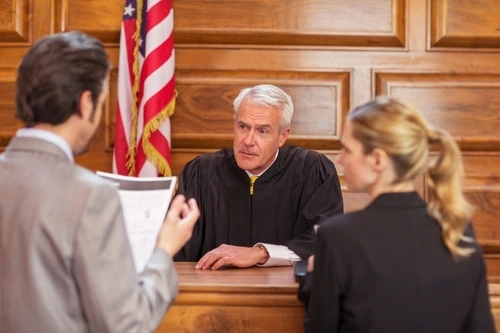
What a Nashville Criminal Defense Lawyer Does for You Throughout the Legal Process
Hiring a lawyer early gives you an advocate from the start. Here is how a defense attorney can help at each stage of your case.
Your First Court Appearance
Your criminal defense lawyer can speak for you, address bond conditions, and protect you from saying anything that could be used against you. Having counsel at your first court appearance also means someone is already reviewing your case and planning the next steps.
During the Investigation
Your attorney will review police reports, body camera and dash camera footage, witness statements, and lab results. Your lawyer will also look for constitutional problems, such as an unlawful traffic stop, an illegal search, or statements taken in violation of your rights.
Plea Negotiations
Depending on the facts, your criminal defense lawyer may pursue a dismissal, reduced charges, a diversion program, or alternative sentencing. Negotiations often begin after your attorney reviews the evidence and identifies any weaknesses in the state’s case. Your attorney will also explain any plea offer, including how it could affect your record, your job, and your future. The decision to accept or reject an offer is yours.
Trial
If your case goes to trial, your attorney will prepare a defense, challenge the State’s evidence, and cross-examine its witnesses. Before trial, your lawyer may file motions to suppress illegally obtained evidence or to exclude unreliable testimony.
During trial, your attorney can present evidence and witnesses that support your side of the story. The State must prove every element of the charge beyond a reasonable doubt, and your lawyer’s job is to hold prosecutors to that burden.
The Value of a Former Prosecutor’s Perspective
Jeffrey Jackson previously worked as a prosecutor, so he understands how the State builds its cases, evaluates evidence, and approaches plea negotiations. He uses that insight to identify weaknesses in the prosecution’s case. While no attorney can guarantee a specific result, having someone who knows both sides of the courtroom can make a meaningful difference.
Contact The Law Office of Jeffrey Jackson for a Free Consultation
Your first court appearance sets the tone for everything that follows, so getting legal help early matters. You do not have to face your first court date in a criminal case alone. The Law Office of Jeffrey Jackson represents people facing misdemeanor and felony charges in Nashville and throughout Middle Tennessee. As a former prosecutor, Jeffrey Jackson brings an inside understanding of how criminal cases are built and how they can be challenged.
Call (615) 254-0202 or fill out our online contact form today to schedule your free, confidential consultation. Let us review your case, answer your questions, and help you take the next step.